Recently, a customer contacted us with a question: “Why is the ash content of my charcoal so high?” This is a very typical question, especially for those producing charcoal for the first time, who are likely to encounter the same issue. In this article, we’ll explore the reasons for high ash content in charcoal and how to solve it.
Based on our years of experience guiding clients in charcoal production, the high ash content of charcoal can be attributed to three main reasons: high mineral content in the raw materials, improper control of the production process, and the introduction of foreign impurities later on. We will explain each of these in detail below.

Raw Material Factors: Minerals are the Fundamental Source of Ash
The ash in charcoal is essentially the residual oxides of unburnable minerals in the raw materials, such as potassium, calcium, magnesium, and silicon. The characteristics of the raw materials directly determine the base ash content.
Raw Material Types
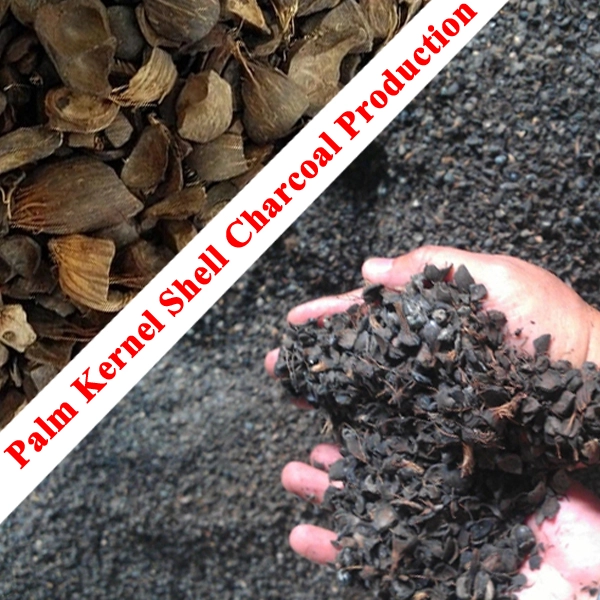
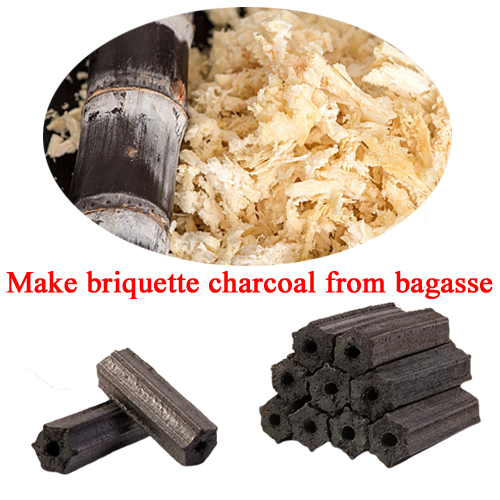
Charcoal made from hardwood, long-growing tree species such as oak and birch, typically has a lower ash content, generally <3%. However, charcoal made from herbaceous raw materials such as straw, rice husks, cotton stalks, and sugarcane bagasse, or from parts like branches, bark, and roots, has a higher mineral content, and the ash content can reach 15%. This is determined by the properties of the raw materials.
Impurity Content in Raw Materials
When collecting raw materials for carbonization, the presence of soil, sand, and dust will not decompose during the carbonization process and will be entirely converted into ash. For example, soil from the roots of felled trees and field sand from harvested straw will significantly increase the ash content.
When collecting charcoal powder to make charcoal briquettes, the presence of soil and sand will also increase the ash content.

Moisture Content and Pretreatment of Raw Materials
If the moisture content of the raw materials used for carbonization is too high and they are not sufficiently dried, a “smoldering” phenomenon will occur during carbonization, resulting in incomplete decomposition of some organic matter. At the same time, minerals in the raw materials are more likely to accumulate. If the raw materials are not screened and cleaned, impurities will be directly introduced into the carbonization furnace, and the ash content will also be too high.
Production Process Factors
Control Deviations in the Carbonization Process
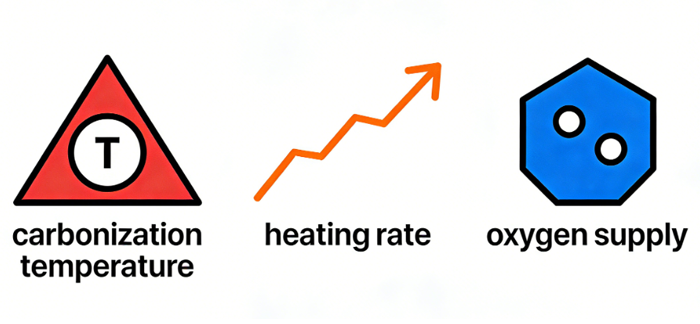
Even with high-quality raw materials, improper processes can lead to increased ash content. The core issues are controlling the carbonization temperature, heating rate, and oxygen supply.
Too Low Carbonization Temperature
Wood carbonization involves four stages: drying, pyrolysis, carbonization, and calcination. If the final temperature is below 500℃, lignin, cellulose, and other organic matter will not decompose completely, and the remaining semi-carbonized material will coat minerals. Simultaneously, minerals cannot fully volatilize at low temperatures; for example, potassium salts will partially vaporize and escape at high temperatures, leading to an increase in ash content.
Excessive Oxygen Supply, Causing “Charcoal Burning”
If the carbonization furnace is not properly sealed or has excessive ventilation, it will lead to excessive oxygen, causing secondary combustion of the charcoal in the later stages of carbonization, known as “charcoal burning.” At this time, the fixed carbon on the charcoal surface is oxidized, while the relative proportion of residual minerals increases, ultimately resulting in increased ash content. Simultaneously, the strength and calorific value of the charcoal will decrease.
Slow Heating Rate
Slow heating prolongs the pyrolysis time of the raw materials, causing moisture and volatiles to escape slowly, and minerals to deposit more easily in the charcoal. Appropriate rapid heating allows volatiles to escape quickly, and some minerals are carried away by the airflow, reducing ash residue.
Incorrect Production Process Selection
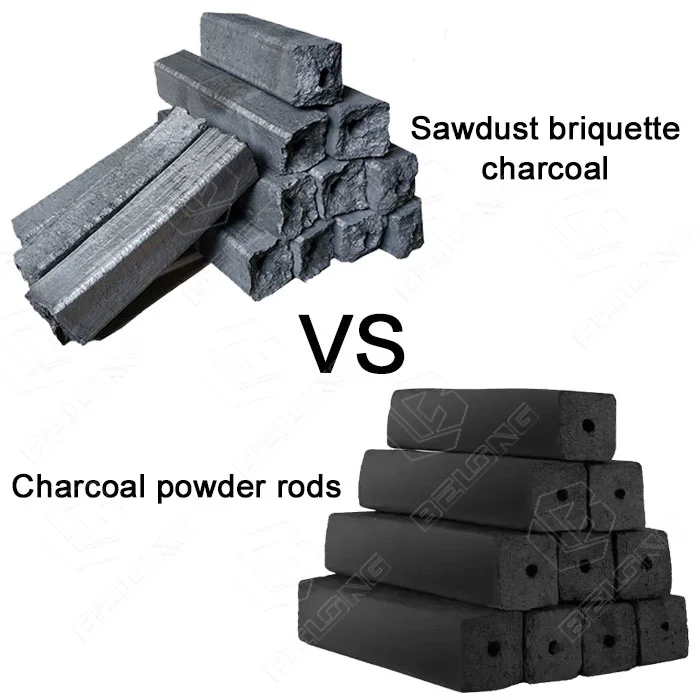
At the beginning of the article, I mentioned a customer who said his charcoal had a high ash content. After the investigation, we found that the main reason was that he had chosen an incorrect production process. The customer’s raw material was sawdust from a sawmill. Normally, to make charcoal from sawdust, the sawdust is first made into sawdust rods, and then the sawdust rods are carbonized to make charcoal. However, this customer carbonized the sawdust first, and a large amount of fine, loose sawdust was directly burned into ash at high temperatures, resulting in charcoal with a high ash content.
Methods to reduce charcoal ash content
We’ve found the reasons why charcoal has high ash content, so the solutions naturally follow.
Select High-Quality Raw Materials for Carbonization
Prioritize hardwoods with a high heartwood content, such as oak, birch, and walnut. Avoid using bark, roots, dead branches, and herbaceous stalks like rice husks and cotton stalks.
Remove Impurities from Raw Materials
Remove inorganic impurities such as soil, sand, and metal fragments from the raw materials using manual or mechanical screening.
Dry the Raw Materials Before Carbonization
Control the moisture content of the raw materials to below 20%. Natural air drying or hot air drying can be used. Do not use wet materials in the carbonization furnace to avoid smoldering and mineral enrichment.
Carbonization process control
Carbonization Temperature Setting: A high-temperature carbonization process is adopted, with the final carbonization temperature stabilized at 800~1000℃ and a holding time of 2~3 hours. When the temperature is below 500℃, the heating time needs to be extended to ensure that the low-temperature smoldering range is overcome.
Oxygen Supply and Sealing Control: Check the sealing of the carbonization furnace door and pipe joints to prevent air leakage and secondary combustion. An oxygen-deficient carbonization mode is adopted: initially, a small amount of oxygen is supplied to aid combustion and raise the temperature; in the middle stage, the ventilation openings are closed to maintain a negative pressure state inside the furnace. If open flames are found burning charcoal inside the furnace, the ventilation openings are immediately sealed to extinguish the fire.
Heating Rate Control: The heating rate is controlled at 10~15℃/min to quickly pass through the drying-pyrolysis stage and reduce mineral deposition. Slow heating (<5℃/min) should be avoided to prevent the slow escape of volatiles and the resulting mineral residue.
Process Monitoring: Install temperature and oxygen concentration sensors inside the furnace to monitor parameters in real time and prevent exceedances.
Choose the correct charcoal production process
This section specifically addresses sawdust charcoal production. The optimal production process involves first extruding the sawdust into briquettes using a sawdust briquette machine and then carbonizing the sawdust briquettes into charcoal.
For information on how to choose the right charcoal-making process and equipment, please refer to the article at the following link.

Packaging and storage
Charcoal can be packaged in clean woven bags or sealed bags and stored in a dry, well-ventilated warehouse. Moisture-proof boards should be laid on the ground to prevent the charcoal from absorbing moisture or dust from the ground.